Interview of the Toulouse Sotheby’s Realty manager Marie-Céline Chavanne

Blog

Can you present your group of agencies?

We have been in existence for nearly 20 years and represent the Sotheby’s brand for Midi Pyrénées and Périgord. We are a team of 20 collaborators who manage an international and national clientele.

You are a partner of Sotheby’s Realty, a large luxury real estate network specialized in high-end properties: Why? What advantages does this bring to your clients?

The Sotheby’s group is a true international network with a presence in almost every region of the world. We are interconnected and truly work together, with clients who may be interested in buying or selling in different regions. This way, we transfer their needs from one agency to another, ensuring the same level of quality and support.

What types of clientele do Résidences Port-Marseillan cater to: local, national, international?

Mostly international or national. Clients looking for this level of quality are primarily from abroad, as “Branded residences” are well developed in the USA, for example, but not yet in France. Miguel Espada is a French pioneer in the sector of Branded Residences.

What is the market like for character vacation homes today?

It exists, especially in cases where the entire organization can be handled by a team of professionals. This way, the property can be profitable when not occupied by its owners.

Does the concept of “Quiet Luxury” – discreet luxury, tailor-made, intimate atmosphere like at Port-Marseillan – still resonate nowadays?

It is still very popular! The main difficulty is being able to offer our demanding clientele the right real estate products in this segment, as they are particularly rare. Sometimes, the prevailing gloominess that French media tend to emphasize daily can be an issue. When people keep hearing that everything is going wrong, they may withdraw and wait for a better time. For the properties in the Port Marseillan project, the right time is now. Later on, it will be too late, as the number of villas with private pools, for example, is limited to 34 units.

What unique characteristics of the real estate market around the Bassin de Thau make it attractive for luxury property buyers?

Its unique waterfront location, the view, the quality of services offered, and the peace of mind that comes with having everything organized for them.

How has the real estate market around the Bassin de Thau evolved in recent years in terms of demand, prices, and availability of luxury properties?

The reputation of the city of Sète, put in the spotlight with its numerous TV series shootings, has truly boosted all the towns around the Bassin de Thau. The renown of Marseillan, already known for its lifestyle, has naturally benefited from this momentum. The arrival of new players who have settled around the lagoon has also contributed to consolidating the “People” image of Thau, subsequently attracting many real estate investors. As for luxury properties, it’s the quality and rarity of a location that draws people in. Since building around the pond has become almost impossible, Port-Marseillan becomes an exceptional opportunity, further supported by the Propriétés & Co Group, led by Miguel Espada, a Branded Residences expert.

Is it more challenging to sell off-plan real estate (VEFA) rather than old properties in the luxury property segment?

To recap, buying off-plan (VEFA) means acquiring a property that is not yet built. The residence in question could be a character apartment or a villa with a pool. Buying off-plan allows acquiring a property that meets the latest construction standards, such as energy efficiency.

To protect the buyer of off-plan property, the property developer must subscribe to insurances that offer associated guarantees for construction, such as:

  • Completion guarantee.
  • Guarantee of apparent defects and non-compliance.
  • Guarantee of perfect completion
  • Ten-year construction guarantee.

Notary fees represent 2 to 3% of the purchase price for a new residence acquired off-plan (VEFA), compared to 7 to 8% in the case of buying an existing property. This is why we refer to “reduced notary fees” when it comes to new acquisitions.

The most commonly shared disadvantage is the time required for construction. It can sometimes be challenging to make certain, more impatient clients accept it from the beginning of the work until the completion.

How do you explain the concept of “Branded Residence” simply to your clients, which is relatively new in France?

It is an investment in new real estate, full ownership, but located within a luxury resort where one can spend time and also invest money, backed by an international hotel brand that provides exceptional services and manages everything, from maintenance to the rental aspect! It is an appreciated comfort, especially among foreign clients who rely on the hotel management company.
Recent Posts

Like St Tropez before Bardot

ex-kitten starlets are thin on the sun-seared ground. So are €6,000 cotton beach dresses with Mongolian fur trim, Lamborghini Gallardos ostentatiously parked in front of harbourside cafes, and gin-palace superyachts. And you certainly won’t see estate agents with details of stratospherically pricey villas in French, English and Russian.

Yet the petite port of Marseillan on the Languedoc coast, kissing a Mediterranean lagoon east of Béziers, has an undeniable frisson of St Tropez. Not the 2009 Riviera honeypot oozing bling, Eurotrash and traffic, but the serene isolated fishing village that first attracted artists and writers in the late 19th century, and then Bardot and the jet set in the 1950s.

As elsewhere in the south of France, looks count. While no doppelgänger, Marseillan shares strands of scenic DNA with its more famous Côte d’Azur counterpart. The views across its dazzling turquoise water to the hillside rooftops of Sète are reminiscent of St Tropez’s to Grimaud and Sainte-Maxime. And both ports have excellent beaches a couple of miles outside town – although you’ve far less chance of being hit by a wayward Cristal cork around Marseillan plage.

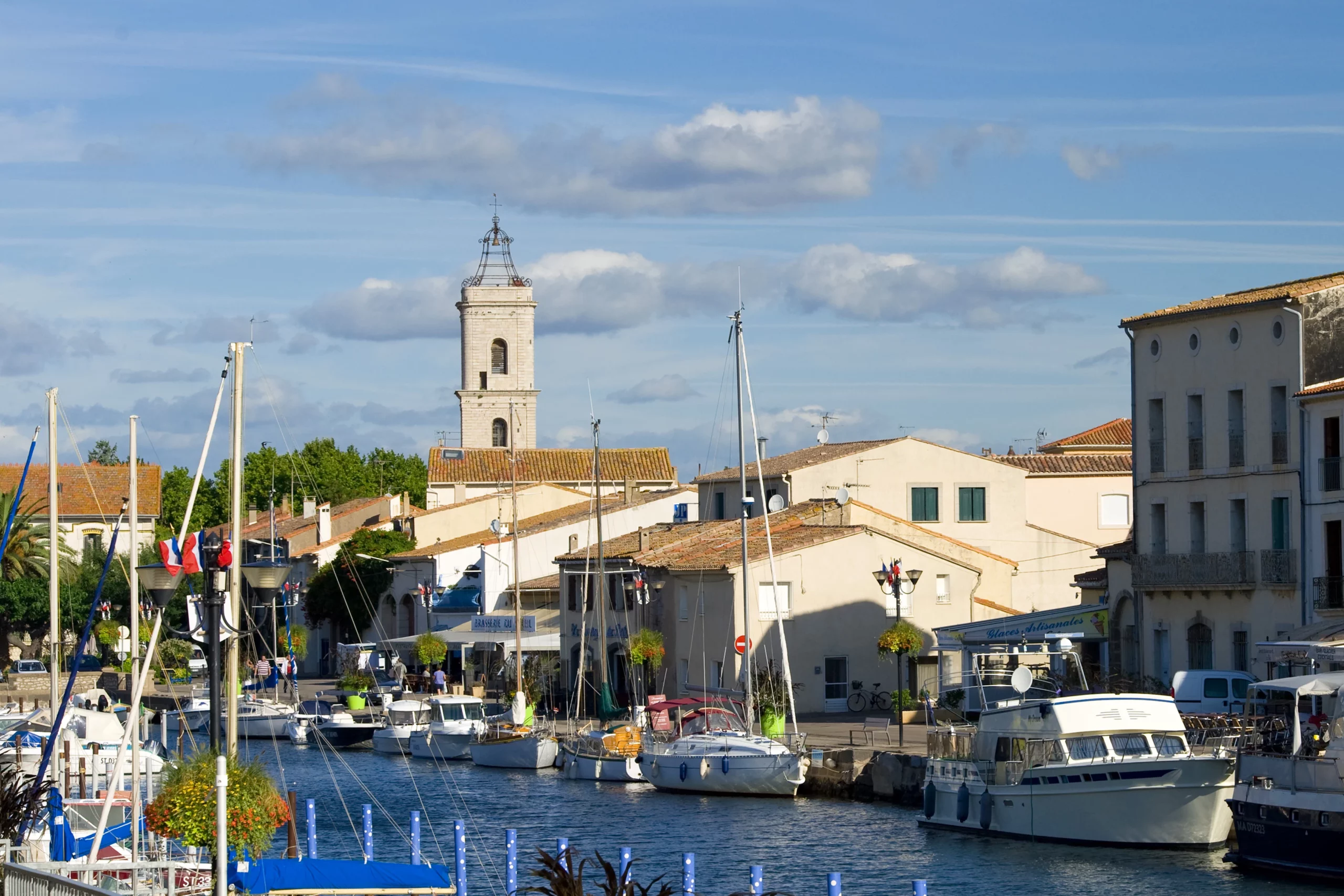
But it’s the town’s protected 17th-century harbour that really captures the early Riviera vibe. Low-level houses laced with wrought-iron balconies and splattered with flowers swaddle a channel that jiggles with small boats and yachts, with a left bank of thriving restaurants and cafes.

And now unpretentious, laid-back Marseillan has some seriously stylish new accommodation. Port Rive Gauche, a converted 19th-century wine storehouse (booming trade spawned several monumental cellars near the waterfront) has two-bedroom apartments with balconies and terraces bombarded with startling lagoon light – all whites and light greys with beams, limed wood floors, and artfully distressed furniture. The little touches – antique dressmakers’ dummies to hang clothes, old trunks and French words spelt out in jumbo metallic letters – are guaranteed to induce serious interior design envy.

So far, so chic. But despite its cool contemporary mood, the development – the only hotel near the harbour – seems to slip easily into Marseillan life. It doesn’t appear to be an early sign of St Tropez-isation. The port’s holiday trump card, after all, is its low-key charm and authentic local activities. It’s why I found myself on the water with Jean-Claude Caumil. The ludicrously healthy retiree offers boat rides around the Bassin de Thau but shows little evidence of brutal commercialisation. His afternoon trip costs just €8pp.

It wasn’t just excellent value, it was also fascinating. The massive lagoon has more than 700 Mediterranean species, including seahorses, and lies at the eastern end of the Canal du Midi, the 240km Unesco world heritage site.

“Do you want Toulouse or Bordeaux?” asked Jean-Claude, as we dissected its narrow entrance, nosing alongside the abandoned rusting hull of the Louisdaky from Cape Town.

Like the best travel, it’s the quirky surprises, rather than the well-known show-stoppers, that hit the high notes. After passing the famed Les Glénans sailing club, where you ring a bell to summon a water taxi across the canal, Jean-Claude turned back to the lagoon, floored the engine and made a gesture of an elderly jockey whipping a horse. We bounced across the water like a giant Space Hopper, windsurfers and kitesurfers trailing in our wake.

After anchoring we spear-fished – I’ve never seen dorado laugh quite so brazenly – and snorkelled in crystal-clear shallows through waving seagrass. But best of all we simply slumped in the boat, let the sun freckle our faces and talked about nothing and everything. “I miss some things about work,” mused Jean-Claude, who swapped his nearby hotel for 364 days a year on the water. “It had a nightclub and 250-cover restaurant. But it’s good to relax.”

He appears to have it nailed. And he’s not alone. Locals around Marseillan have turned relaxation, lubricated with decent wine and fresh seafood, into an art form. A few hours later, I’m outside a white-walled, red-roofed chateau, sipping rosé and shooting the breeze with the owners, Pierre and Marie-Christine Fabre de Roussac. Tucked into magnificent towering trees, Domaine de la Bellonette is one of several grand estates lining the Bassin’s north shore.

It offers spacious rooms with period furniture and a recently converted studio, but I was there for a major foodie treat: the local speciality of brazucade – a mussel barbecue with shellfish straight out of the briny.

In the past, when fennel was as common as nettles, chefs would cover the crustaceans with a generous blanket of the herb, before torching it to generate a steaming scented infusion. When the shells popped, it was job done. Ours was a tad more mainstream, with mussels cooked over glowing wood embers, but it still beat the hell out of burgers and chicken wings, particularly with its side-serving of zingingly fresh oysters. “I once made a 12m-long brazucade,” said Pierre, casually opening another Languedoc wine. “It was no particular occasion. Just pleasure. Why not? We are French. We are Gaulois.”

And also, Pierre, because you don’t have to cook on a £20 B&Q barbie. But it’s hard to disagree with the south-west joie de vivre. A couple more wines and I was seriously considering relocating.

Spend any time in Marseillan and you’re constantly pulled back to the Bassin de Thau. All life swirls around, on or underneath it.

It’s why I headed east along the shore to Medi Thau. It sounds like a centre for genetic engineering. And in a sense it is – only for oysters, not humans. The family firm has revolutionised the farming of the acclaimed crustaceans that thrive on the lagoon’s phytoplankton.

Instead of submerging them on ropes for 12-18 months’ growth, Medi Thau’s solar-powered lifts regularly pull them out of the briny for hours, sometimes days, at a time. The result is that, rather than endlessly gorging, the critters are forced to keep their mouths closed to retain water – a mini workout.

“We make them suffer a little,” says fisherman and directeur général Florent Tarbouriech, as we cruise around the sun-dappled oyster beds. “It makes them stronger, more muscular, more fleshy.”

The tubby, plump beauties are up to 17% bigger than normal, fit to grace dining tables in Venice, Hong Kong and Shanghai. They also have a suntan: exposure to ultra-violet rays gives the shells a delicate rose blush and the name Pink Diamond.

But in Marseillan you don’t need to splash a second mortgage at a flash restaurant. Medi Thau serves the super-sized aphrodisiacs in its straw-roofed shack, dripping with geraniums and surrounded by old fishing nets. The Pink Diamonds are extraordinary, more like steaks than oysters, with an addictive sweet aftertaste.

“All this just by lifting them out of the water,” says Florent, as he prizes open another fleshy specimen. “C’est trés jolie. C’est incroyable.” Which, worryingly, is exactly what director Roger Vadim and many others said about Brigitte Bardot in her 1950s St Tropez heyday.

But while Pink Diamonds are another recent development guaranteed to put Marseillan on the food and travel map, the small port seems more than capable of retaining its unhurried, sunny, bling-free charm.

Port Marseillan Harbor

South Of France Gets A New Luxury Seafront Resort With Villas And Vineyard

Offering a modern twist on French living, the resort’s architecture was designed by Slow Life Architects to be cohesive with the traditional buildings in the area, many of them dating back to the 12th century. The resort was developed by Propriétés & Co to extend the fishing village of Marseillan.

The UNESCO Heritage site of Marseillan is perhaps one of the oldest French towns founded in the sixth century B.C. It is known for its wine production today and is the largest wine-producing area in the world.

The development will include 133 studios to four-bedroom stylish apartment residences, 30 Mediterranean patio villas, as well as four spectacular waterfront villas. Prices range from mid $400,000 for a one-bedroom Garden Suite to $5.3 million for a luxurious Waterfront Villa.

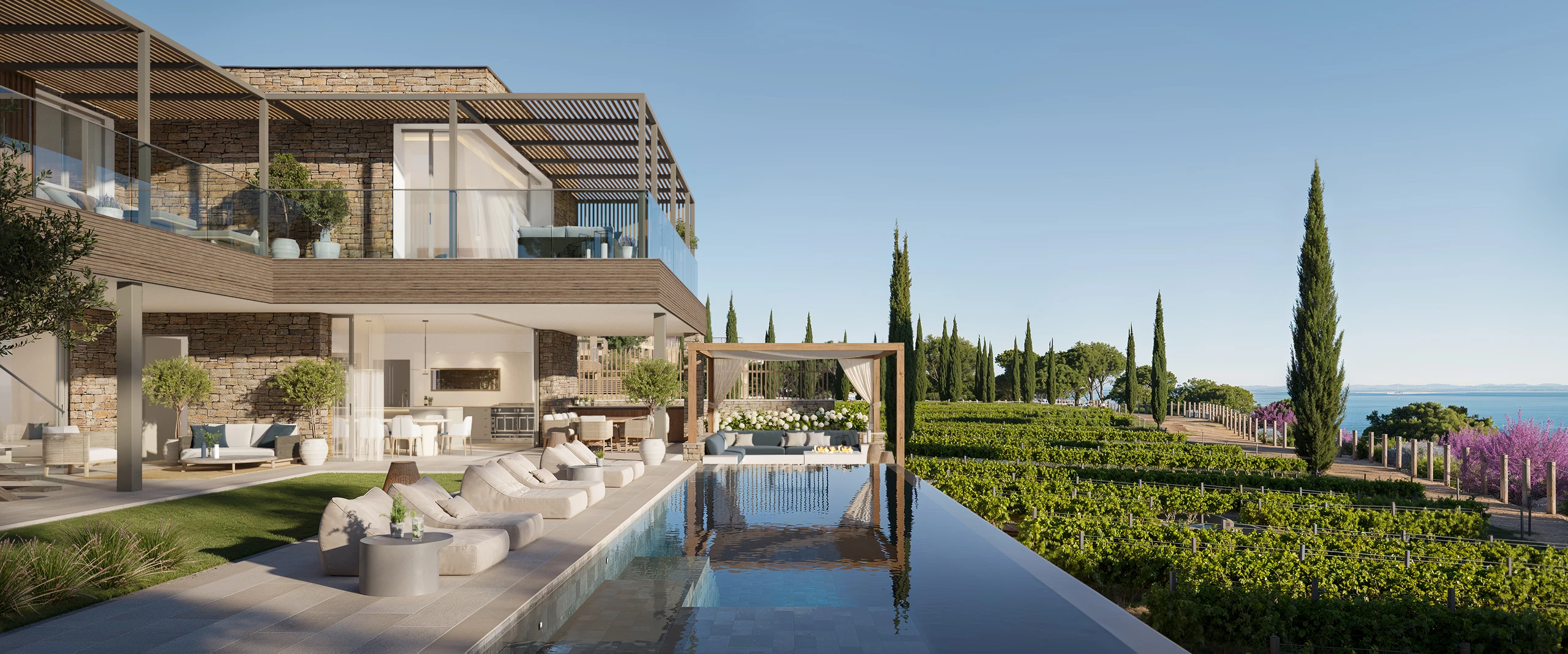
The residences range from one-bedroom garden suites and larger apartments to the ultimate villas in the Waterfront Collection. Each of the four villas will feature private underground parking, a large basement with a state-of-the-art cinema, billiards room, a private wine cave, and a sauna. The villas will also 

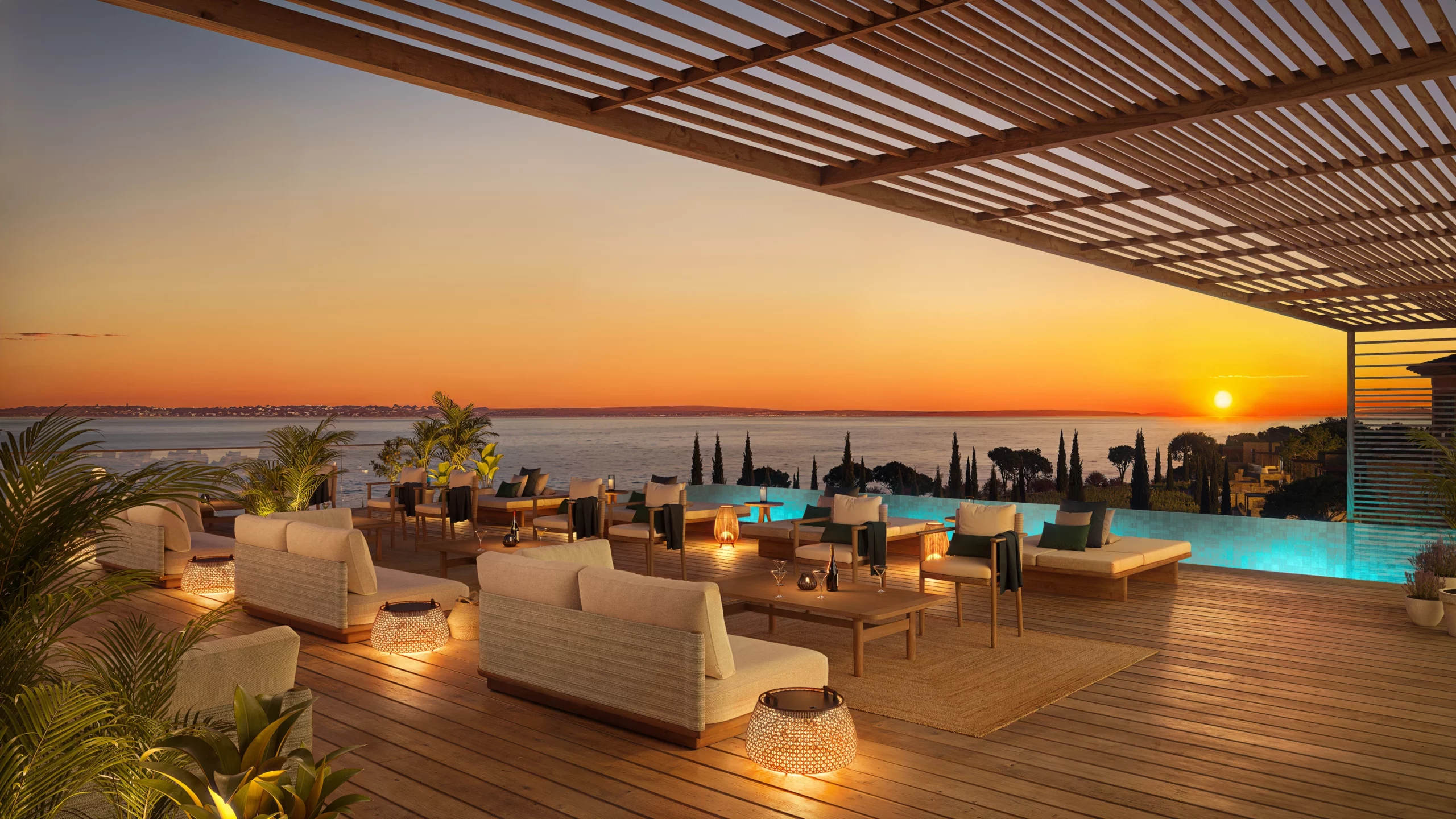
Outdoor features of the villas include a private Jacuzzi, an infinity pool, and a ground-floor barbecue area, with a stainless steel sink and an outdoor fire pit, as well as an expansive terrace and pergola on the upper floor, all with gorgeous views of the resorts working, private vineyard, and the Thau lagoon beyond.

Port Marseillian Resort & Residences will be part of a large working vineyard, managed by the Seigneurie de Peyrat wine domain, a top winemaker in the region, and will provide villa owners with access to the vineyards to participate.

Owners will have direct access to a 11-acre vineyard and Wine Academy, which includes winemaking courses and personal wine storage areas. A Nautical Club is also part of the offering.

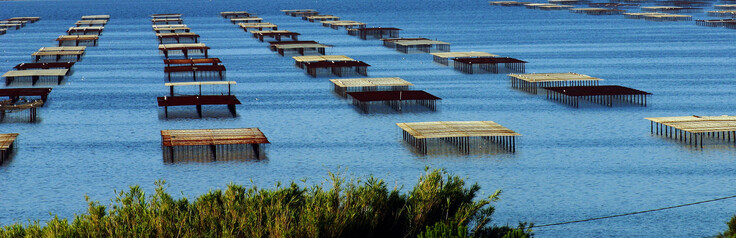
The development overlooks the world famous oyster beds of the Thau Lagoon, home to over 700 Mediterranean species including 18 varieties of shellfish, including the popular Pink Diamond oysters, a delicacy in this region.

The Genius Loci

What is the Genius Loci?

Genius Loci is a Latin term meaning “the spirit of a place.” It refers to the unique atmosphere, identity, or soul of a location—shaped by its history, geography, architecture, and the sensory experience it evokes.

In ancient Roman culture, the Genius Loci was a protective deity of a place, believed to watch over it and its inhabitants. Today, the term is widely used in urban planning, architecture, and landscape design to emphasize the importance of preserving and enhancing a site’s distinctive qualities in any development project.

The core idea is that every place has an essence that shapes how people experience and interact with it—and that preserving this spirit is essential for maintaining its harmony and appeal.

How does P&CO understand the Genius Loci before initiating the design phase of a resort project?

Understanding a site’s Genius Loci before starting the design process is essential to ensure a harmonious and authentic integration. P&CO follows a multi-step approach:

Observation and Immersion

  • Visit the site at various times of day and under different weather conditions.
  • Observe landscape, topography, natural light, prevailing winds, and native vegetation.
  • Listen to ambient sounds (nature, local activity, silence).
  • Sense the overall mood and emotional impression the site conveys.

Historical and Cultural Study

  • Explore the site’s history: Which civilizations or events shaped it?
  • Investigate local traditions, vernacular architecture, and artisanal crafts.
  • Understand any myths or beliefs tied to the place.

Social and Economic Analysis

  • Observe local lifestyles and how people interact with their environment.
  • Understand key economic and artisanal activities in the region.
  • Meet with community stakeholders (residents, artisans, associations, historians).

Environmental and Ecological Study

  • Identify ecosystems and native species.
  • Understand resource management (water, energy, biodiversity).
  • Analyze natural risks (erosion, sea level rise, fires).

Translating Genius Loci into Design

  • Draw inspiration from local architecture while integrating innovation.
  • Use regional materials and traditional techniques to minimize environmental impact.
  • Balance built environment and nature to preserve the site’s soul.
  • Create spaces that resonate with the location’s identity and ambiance.

By incorporating these elements from the outset, a resort is not just built on a site, but with the site—ensuring a unique and authentic experience for visitors.

The Resort Design and Development Process at Propriétés & Co

P&CO’s process combines rigor and a holistic vision that integrates the Genius Loci, “glocal” architecture (global & local), sustainable innovation, and immersive guest experiences. Key stages include:

Site Analysis and Immersion

  • Site study: Identification of the Genius Loci (natural, historical, cultural, social aspects).
  • Environmental assessments: Ecosystems, water resources, climate, natural hazards.
  • Market analysis: Resort positioning based on tourism trends and demand.
  • Local immersion: Engaging with communities, artisans, and local experts for authenticity.

Architectural and Landscape Design

Masterplanning & Design

  • Define strategic axes: eco-tourism, wellness, luxury, gastronomy, slow travel.
  • Integrate buildings into the landscape with respect for views and environmental context.
  • Architecture inspired by heritage, with a contemporary and eco-responsible approach.
  • Use of local materials and low-carbon construction techniques.
  • Landscapes that foster biodiversity and regenerative agriculture.

Sensory Experience

  • Craft immersive guest journeys (contemplative spaces, wellness, gastronomy).
  • Water as a central element: natural pools, sustainable water management.
  • Spaces designed for reconnection with nature and holistic well-being.

Sustainability & Technology

The resort project is part of an exemplary sustainable development approach, fully integrating the site’s natural characteristics and contemporary climate challenges.

  • A bioclimatic design that takes advantage of natural light, cross-ventilation, and the site’s orientation to reduce energy needs.
  • The integration of renewable energies—solar, geothermal, biomass, and heat pumps—to ensure partial energy autonomy for the resort.
  • A structured landscape framework forming the basis of the project’s composition, ensuring integration, biodiversity, and aesthetic appeal.
  • A clear circulation layout that promotes soft mobility (pedestrians, bicycles) and connects to the local network.
  • Optimized access and readable entry points for visitors, minimizing nuisances and improving flow.
  • Primarily collective parking, landscape-integrated and designed to limit soil sealing.
  • A spatial distribution of the resort’s functions that prioritizes panoramic views and seamless landscape integration.
  • A gradual building height arrangement that, where possible, creates a balcony effect on the site, protects from prevailing winds, and enhances natural ventilation.
  • A master plan that respects the site’s topography and its ecological and tourism objectives.
  • Careful landscape integration within an exceptional natural setting, enhancing views, ambiance, and the connection to the sea.
  • Unique atmospheres that reflect the project’s high standards in tourism, sensory experience, and architecture.

Economic Model & Financing

Financial Strategy

  • Hybrid business model: hotel operations, branded residences, exclusive memberships.
  • Strategic partnerships with brands, investors, and local institutions.
  • Optimized legal and tax structuring for hotel and real estate investments.

Commercialization & Branding

  • Experiential marketing and storytelling centered on the Genius Loci.
  • Targeting high-end clientele seeking nature, wellness, and authenticity.
  • Digital strategy: social media, influencers, premium booking platforms.

Construction & Operations

Execution Phase

  • Quality-controlled project delivery with optimized timelines.
  • Collaboration with renowned architects and designers.
  • Creation of prototype spaces (mock-up rooms, show villas).

Operations & Guest Experience

  • Staff trained in excellence and immersive hospitality.
  • Highly personalized guest experience rooted in slow living & wellness.
  • Resort evolution based on trends and guest feedback.

At Propriétés & Co, expertise lies in the fusion of authenticity, sustainability, and experiential luxury. Each resort becomes a singular destination, capturing the essence of its location while offering a respectful, meaningful, and elevated experience for all.